



































Full Mouth Rehabilitation: Dental Restoration and Reconstruction
Full mouth rehabilitation restores severely worn teeth. Dental reconstruction addresses decay, occlusion & esthetics. Learn how implants & restorations help!
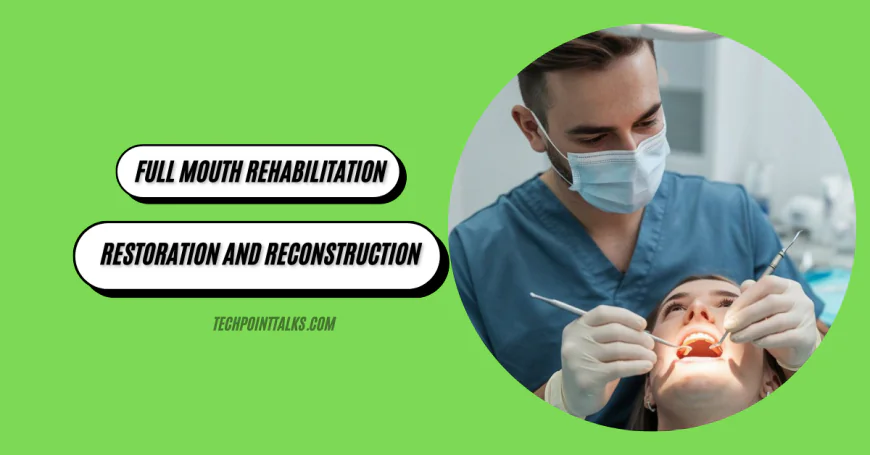
Full mouth rehabilitation or full mouth reconstruction is an all-inclusive procedure of restoration and the rebuilding of every tooth in the upper and lower jaw. This complex procedure involves a combination of a range of dental procedures in the treatment of far-reaching oral health problems with the aim of enhancing functionality, esthetics and oral health in general.
Understanding Full Mouth Rehabilitation
Full mouth rehabilitation is a complex form of treatment, or a sequence of dental processes, aimed at restoring or re-forming all teeth in both jaws. This is not a single dental treatment procedure but a series of dental treatment procedures that are carried out over a period of time, with the view of attaining and sustaining optimal oral health.
Full mouth rehabilitation aims at offering functional and aesthetic dental health benefits to the patient, with the result often being many smile makeover procedures to produce complete restoration of the mouth.
Benefits of Full Mouth Rehabilitation
Full mouth rehabilitation has many advantages which are not merely cosmetic. After full-mouth rehabilitation, people can feel healthier in their mouths, more comfortable, and have an attractive smile.
Dental crowns that are common during the process can deal with the problems of alignment of teeth, reinforce weak teeth and improve their overall looks. This holistic practice does not only restore functionality, but enhances confidence and the quality of life as it targets the cause of these problems, including tooth decay and gum disease.
Components of Full Mouth Rehabilitation
Clinics and dental associates perform thorough evaluations to determine the most appropriate treatments for each patient’s full mouth rehabilitation needs. These treatments may include dental implants, veneers, bridges, and periodontal therapy to address issues like advanced gum disease. Common procedures include:
- Veneers
- Crowns
- Tooth replacements like dentures or All-on-X implants
In some cases, periodontal care, scaling and root planing, and orthodontics with braces may also be necessary to ensure proper alignment and oral health. Each treatment plan is carefully personalized and customized.
The Process of Dental Restoration
Full mouth rehabilitation begins with first time consultation and evaluation. The dentist will also undergo extensive examination of your dental health during this extensive assessment.
This comprises the evaluation of X-rays, your bite, gum conditions and the beauty of your teeth. The dentist is seeking structural issues, the fitting of your teeth and where dental crowns may be required during the process of restoring your mouth. Such a meticulous analysis also means that the treatment plan manages all the oral health problems that are present.
Planning Your Mouth Restoration
Mouth restoration planning is an imperative part of full-mouth rehabilitation that includes developing a unique treatment plan that satisfies cosmetic and restorative requirements. This dental program is very individual-based, since each patient has their own dental requirements.
There may be such procedures as dental implants, crowns, veneers, braces, or periodontal therapy. Your dentist will work with you to work out a complete treatment plan that helps to deal with such problems as tooth decays and missing teeth, pain, the misalignment of teeth, infection, etc. and provide your oral health.(Learn more about dental restoration on wikipedia).
Common Procedures in Dental Restoration
Here's how a full mouth rehabilitation may address a variety of dental needs and could involve additional procedures, including:
- Dental implants for missing teeth
- Veneers for cosmetic enhancement
- Bridges to fill gaps
Oral hygiene is crucial during this time. Each procedure is carefully executed to ensure the best possible outcome for the patient's oral health and aesthetics, leading to a complete mouth restoration.
Full Mouth Reconstruction Techniques
Full mouth reconstruction depends on dental crowns which provide restorative qualities of protection as well as strength to the damaged teeth. Contemporary dental crowns are made to look like natural enamel and they look quite natural and appealing to the eyes.
Bite problems can be corrected by using custom crowns, which relieve the patient of the burden on jaw muscles. Crowns reinforce weak teeth, which often need to be treated with root canals or other significant work done on the teeth, which prevents bacterial infiltration.
They solve the same issues as veneers, still, they are usually used with molars and with badly rotted or damaged teeth. They are also frequently used to treat dental implants.
Implants for Missing Teeth
The dental implants are one of the best solutions to full mouth rehabilitation since it is permanent, durable and almost imperceptible to the natural teeth. These are dental implants that can be long-lasting giving a person a functional and desirable smile.
It is done through the insertion of threaded posts into the jawbone which serves as substitute tooth roots. These posts fuse with the jawbone by the fusion between the jawbone and these posts during the process known as osseointegration.
Abutments are tiny connectors that connect the artificial teeth replenishment to the threaded posts of the dental implants. Full-arch implants involve the replacement of the majority, or all, of missing teeth in a single arch, with approximately four strategically placed implants. In case the jawbone is not healthy, All-on-X implants can be prescribed.
Addressing Occlusion Issues
It is essential to treat the problem of occlusion in the framework of full mouth rehabilitation. Poor bite positioning may cause pain in the jaw, headache, and the damage of teeth. Bite: Custom dental crowns are able to correct the bite which puts strain on the jaw muscles.
A rehabilitation treatment program that involves the use of orthodontics, like braces, is likely to be presented as a complete treatment to fix more serious cases of misalignment.
Teeth that are in the right position may enhance oral health. The procedures allow the attainment of optimal occlusion and temporomandibular balance and good functioning of the jaw with the help of restorative procedures.
Cosmetic Considerations in Full Mouth Rehabilitation
Aesthetic improvement has been an essential factor in dental restoration as part of the full mouth rehabilitation to provide a harmonious and attractive smile. The contemporary dental crowns are meant to resemble the look of the natural enamel so that the eventual look is realistic and appealing.
These dental crowns are able to enhance the appearance of teeth which are stained, strangely shaped and uneven. Mouth restoration using dental procedures including dental implants, veneers, and dental braces, may lead to a more confident smile, better chewing and speech, a better bite, less tooth sensitivity, elimination of TMJ symptoms, and a more attractive look on the face.
The outcome is a full restoration of the mouth which is not only restorative of the functionality but also increases the self-esteem.
Managing Gum Disease During Rehabilitation
The gum disease in the case of full mouth rehabilitation should be managed to increase the effectiveness of the treatment plan in the long term. When untreated, gum disease has the potential to invalidate the stability of dental implants and other restorative dental procedures.
Due to this reason, dentists screen all their patients on any symptoms of active gum disease and other periodontal complications. Such treatments can be scaling and root planing or laser therapy. Treatment of the gum disease is a healthy beginning to the curative procedure resulting in a more stable and permanent total mouth reconstruction.
Periodontal care entails the treatment of the gum disease, which is an inflammatory and painful disease of the tissues that support the teeth. It is among the causes of tooth loss. In case of gum disease, your dentist will cure it by scaling and root planing the disease to remove plaque and clear the infection underneath your gums. Before you are able to receive All-on-X implants you may have to undergo this therapy.
Case Reports: Success Stories in Mouth Restoration
The success stories in mouth restoration, which can be achieved through full mouth rehabilitation, are presented in case reports. These are some illustrations on how a total dental treatment such as dental implants, crowns and periodontal treatment can significantly transform oral health and beauty.
Full mouth rehabilitation is followed up to assess the compliance to removable occlusal splint to reinstate vertical dimension and provisional restorations to check esthetic and functional outcome.
These case studies are very informative in the real life effects of total mouth restoration, which gives hope and encouragement to those who think of such kind of treatment.
Timeframes for Treatment Completion
It is essential to know how long it may take to do a full mouth rehabilitation to plan the treatment of the patients. The patient was tested over the 1 month period of orthodontic appliance in terms of its adaptation to the improved VDO. Interim restorations were followed through a 3 months period and used as a guiding measure to definitive oral rehabilitation.
Each phase will take a varying duration, which is dependent on the complexity of the case, the dental procedures involved in a particular situation, and the overall healing process of the patient.
Whereas certain procedures, such as dental crowns and veneers, can be done within a comparatively short time frame, some, such as dental implants and orthodontics, could take a long time. The open communication with your dentist assists in making realistic expectations and a pleasant experience of having dental restoration.
Post-Treatment Care and Maintenance
The success of full mouth rehabilitation depends on post-treatment care and maintenance to manage its prolonged success. Recipients of new teeth are recommended on good oral care especially when there is a grinding or gum problem.
Regular brushing, flossing, and cleaning of the teeth by a professional are required hence good oral hygiene practices are necessary to ensure the best oral health and to avoid complications.
Dental problems, gum disease or dental decay, could be detected and treated early by visiting your dentist regularly which will make sure that the health and the appearance of your dental restoration in the long-term. Oral hygiene education was provided and periodic reviews set. Three reviews were done over a 6 months time.
Potential Challenges and Solutions
In as much as full mouth rehabilitation is very advantageous, one has to know the possible challenges and remedies. One of the challenges is lack of space to restore especially when dealing with seriously worn teeth.
In order to address this concern, some methods like crown lengthening or orthodontic therapy can be used to provide sufficient room to place dental crowns or any other form of restorative methods.
By taking these issues into consideration at the outset, the full mouth rehabilitation will have a successful outcome and result in a functional, aesthetic and healthy complete mouth restoration.
Nonetheless, it is difficult to rehabilitate the badly worn dentition in the absence of the adequate space to put the restoration. The cost and time spent in the laboratory to prepare the processed acrylic resin temporary restorations is a constraint in this case but since the patient is complex, the additional effort should be justified.
Conclusion
To sum up, full mouth rehabilitation can be called one of the most comprehensive kinds of dental care nowadays. It also enables the smile to appear and function in a more effective way as it is a combination of restorative and cosmetic dental work.
It is important to understand that the form is a follow-up to the functionality and that anterior teeth are very important in the maintenance of the oral health. In case a person desires this life-changing treatment, she or he must discuss all his or her decisions regarding the full-mouth rehabilitation with a trusted dentist.
FAQS
Q1. Is full mouth reconstruction worth it?
Yes, Full mouth rehabilitation can greatly improve comfort, confidence, oral health, and overall appearance. It provides a stable foundation for replacement teeth and is especially valuable for people with major dental issues.
Q2. What is full mouth rehabilitation?
It is a comprehensive process that rebuilds or restores all teeth in both jaws. The goal is to restore function, esthetics, and oral health through various restorative treatments suited to the patient’s dental condition.
Q3. What are the main steps in full mouth rehabilitation?
-
Complete evaluation
-
Treatment planning
-
Tooth preparation
-
Creation of custom crowns/implants
-
Final placement and bite correction
-
Ongoing follow-up and maintenance
Crowns and implants are often ceramic for natural aesthetics and strong function.
Q4. What does full mouth rehabilitation mean?
It is not a single treatment but a combination of procedures—crowns, implants, orthodontics, etc. performed over time to fully restore oral health and appearance.
Q5. What happens during the crown/implant process?
Teeth are reshaped for crowns, temporary crowns may be placed, and advanced imaging ensures accurate color, shape, and alignment. Dentists verify bite stability and give guidance for long-term care, especially for patients with grinding or gum concerns.
What's Your Reaction?
 Like
0
Like
0
 Dislike
0
Dislike
0
 Love
0
Love
0
 Funny
0
Funny
0
 Angry
0
Angry
0
 Sad
0
Sad
0
 Wow
0
Wow
0