

































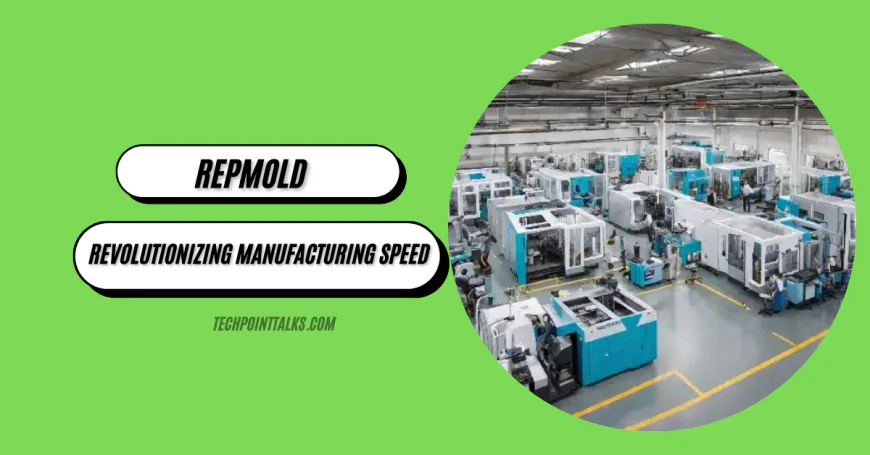
RepMold: Revolutionizing Manufacturing Speed
Explore RepMold manufacturing technology, an agile approach revolutionizing mold creation for rapid prototyping and low-volume production. Discover its benefits for speed, cost, and design freedom.
In the fast-paced world of modern manufacturing, where innovation cycles shrink and consumer demands for customization soar, the ability to rapidly develop and produce components is paramount. Traditional tooling methods, while robust and suitable for mass production, often involve significant lead times and substantial upfront costs, stifling agility.
This is precisely where RepMold manufacturing technology steps in, offering a transformative approach to mold creation and part production. From my perspective, having observed its evolution and applications across various industries, RepMold isn't just a buzzword; it's a strategic imperative for businesses looking to stay competitive, enabling faster iterations, shorter time-to-market, and greater design freedom. It fundamentally shifts how we think about bringing new products to life, challenging long-held assumptions about tooling expense and timelines.
The essence of RepMold technology lies in its ability to enable replicable, rapid molding, allowing engineers and designers to move swiftly from concept to physical prototype and even to low-volume production parts, without the typical roadblocks of conventional manufacturing. Think of it as an agile toolkit for physical goods. Instead of waiting weeks or months for a machined steel mold, RepMold leverages advanced techniques to produce functional molds in days or even hours.
This capability fundamentally alters the product development timeline, encouraging more experimentation and refinement earlier in the design phase. I’ve witnessed countless projects stall due to tooling budgets or lead times, and RepMold offers a compelling alternative that accelerates innovation while maintaining a tight control on costs, especially for specialized or niche product lines.
What is RepMold Technology?
At its core, RepMold is a suite of advanced manufacturing techniques that enable the rapid, flexible, and often additive creation of molds and tooling. Unlike traditional subtractive methods where material is removed from a large block to form a mold cavity, RepMold frequently builds molds layer by layer or uses easily formable materials to capture intricate geometries. This broad definition encompasses several distinct processes, all sharing the common goal of speed and adaptability. It’s about democratizing access to complex molding capabilities, moving beyond the exclusive domain of high-volume production facilities. My own experience has shown that understanding the underlying principles is key to selecting the right RepMold approach for a specific application, balancing material properties, production volume, and cost efficiency to achieve optimal results.
Beyond Traditional Tooling: The Need for Speed
The traditional approach to tooling, involving precision machining of hardened steel or aluminum, remains indispensable for mass production where millions of identical parts are required. However, for prototyping, small-batch runs, or products with short lifecycles, this method becomes prohibitively expensive and time-consuming. Imagine developing a new medical device where regulatory approvals require several design iterations; each change would necessitate a costly and lengthy re-tooling process.
This is precisely the gap RepMold technology fills. It addresses the critical need for agility in a market that demands constant evolution, allowing businesses to test ideas quickly, gather market feedback, and pivot designs without incurring massive financial penalties or delays. It's about empowering engineers to innovate faster, not just cheaper.
The Core Principles of RepMold
The guiding principles behind RepMold technology are rooted in modern manufacturing philosophies: speed, iteration, cost-effectiveness, and design flexibility. It champions an approach in which tooling is seen not as a permanent, immovable fixture but as an adaptable component of the production process. This paradigm shift encourages a more experimental, iterative design process, enabling multiple mold variations to be created and tested in rapid succession.
From a practical standpoint, this means a product can move from concept to consumer feedback in a fraction of the time it would take with conventional methods. This responsiveness is vital for staying ahead in industries where product lifecycles are measured in months, not years, and customer expectations for novelty are ever-increasing.
Speed and Iteration: A Design Engineer's Dream
For any design engineer, the ability to rapidly iterate on a physical product is invaluable. RepMold technology transforms this ideal into a tangible reality. Instead of waiting weeks for a mold, a designer can have a functional mold produced overnight or within a few days, allowing for immediate testing of form, fit, and function. This accelerates the design cycle exponentially, enabling multiple rounds of refinement before committing to expensive hard tooling.
I’ve witnessed projects where engineers could literally print a mold, cast a few parts, test them, tweak the design in CAD, and then print an improved mold – all within a single workweek. This iterative freedom fosters innovation, reduces the risk of costly design flaws, and ultimately leads to superior end products that are thoroughly vetted and optimized for performance.
Cost-Effectiveness for Low Volume Production
One of the most compelling advantages of RepMold technology is its inherent cost-effectiveness, particularly for low to medium-volume production runs. Traditional hard tooling costs can easily run into the tens of thousands or even hundreds of thousands of dollars, a significant barrier for startups or specialized product lines. RepMold processes, leveraging techniques such as 3D printing for molds or silicone RTV molding, significantly reduce this upfront investment.
This makes it feasible to produce custom parts, limited-edition products, or pre-production samples without committing to the significant expenditures associated with conventional methods. It essentially levels the playing field, allowing smaller businesses and independent innovators to compete with larger enterprises by offering specialized products that would otherwise be economically unviable.
Key Technologies Powering RepMold
RepMold is not a single technology but rather an umbrella term for several innovative processes that facilitate rapid mold creation. The landscape is constantly evolving, with new materials and methods emerging regularly. However, the foundational technologies largely center on additive manufacturing, also known as 3D printing, and advanced silicone molding techniques.
Each offers distinct advantages and is suited to different applications, material requirements, and production volumes. Understanding these nuances is crucial for any expert advising on manufacturing strategies, as the choice directly impacts the final product's quality, cost, and lead time. The synergistic application of these technologies is often where the most impactful RepMold solutions are found.
Additive Manufacturing for Molds: A Game Changer
Additive manufacturing, or 3D printing, has revolutionized the creation of molds and tooling. Processes like stereolithography (SLA), fused deposition modeling (FDM), and material jetting can directly print complex mold cavities from various polymers, waxes, or even sand. These printed molds can then be used for injection molding of plastics (for short runs), rubber molding, vacuum forming, or even as patterns for investment casting.
The level of detail and geometric complexity achievable through 3D printing far surpasses what's often practical with traditional machining for intricate designs. I've personally seen how 3D-printed sand molds have significantly accelerated the production of large metal castings, drastically reducing lead times compared to conventional pattern making, demonstrating the technology's scalability and impact beyond small parts.
Silicone Molding and RTV Processes
Room Temperature Vulcanizing (RTV) silicone molding is another cornerstone of RepMold technology, particularly effective for creating flexible molds from a master pattern. This process involves casting liquid silicone rubber around an existing model (often 3D-printed) to create a highly accurate, flexible mold. Once cured, the silicone mold can then be used to cast multiple parts using materials like urethane resins, waxes, or low-melt metals.
Its advantages include excellent detail reproduction, ease of use, and relatively low material costs for the molds themselves. While these silicone molds have a limited lifespan compared to hard tooling, typically yielding tens to hundreds of parts, they are perfect for prototyping, art reproductions, or short-run production where intricate details and quick turnaround are critical.
Hybrid Approaches: Combining Strengths
Often, the most effective RepMold strategies involve a hybrid approach, combining the strengths of different technologies. For example, a highly detailed master pattern might first be created using high-resolution 3D printing (SLA or DLP). This master can then be used to create multiple RTV silicone molds, allowing for parallel production of small batches of parts.
Alternatively, 3D-printed plastic molds could be reinforced with metal inserts or coatings to improve durability and enable slightly longer injection molding runs. These hybrid workflows leverage the specific benefits of each technology – the speed and complexity of additive manufacturing, combined with the material versatility of silicone molding or the strength of traditional materials – to create optimized, cost-effective solutions for diverse manufacturing challenges. This pragmatic integration is a hallmark of sophisticated RepMold implementation.
Applications Across Industries
The versatility and efficiency of RepMold technology have made it indispensable across a wide array of industries, each leveraging its benefits in unique ways. From the demanding environments of aerospace and automotive to the highly personalized needs of consumer goods and medical devices, RepMold is proving to be a catalyst for innovation and operational improvement.
Its adaptability means that whether you're dealing with extreme temperatures, biocompatibility requirements, or simply aesthetic complexity, there's often a RepMold solution that fits. My observations suggest that industries embracing this technology are not only gaining a competitive edge but also fundamentally reshaping their product development and supply chain strategies to enhance resilience and responsiveness.
Aerospace and Automotive: Lightening the Load
In aerospace and automotive sectors, the drive for lighter, more complex, and performant components is relentless. RepMold technology facilitates the rapid prototyping of intricate parts, including those with internal geometries optimized for strength-to-weight ratios, which would be impossible with traditional machining.
For instance, 3D-printed patterns can be used for investment casting complex turbine blades or lightweight structural components, significantly reducing development times. In automotive, it enables rapid iteration of interior components, custom dashboards, or specialized aftermarket parts, allowing designers to quickly test ergonomics and aesthetics. This speed is crucial in an industry where product cycles are constantly compressing, and the need for rigorous testing and validation of novel designs is paramount, without incurring prohibitive delays.
Consumer Goods and Medical Devices: Customization at Scale
The consumer goods market thrives on novelty and personalization, while the medical device industry demands precision, compliance, and often, patient-specific solutions. RepMold technology is a perfect fit for both. For consumer goods, it allows brands to quickly prototype new product designs, experiment with various textures and forms, and produce limited-edition runs without massive tooling investments.
Imagine customizing phone cases, eyewear, or even footwear components. In medical devices, the ability to create patient-specific surgical guides, prosthetic sockets, or anatomical models via RepMold processes (e.g., using 3D-printed molds for silicone parts) is a game-changer. It enables personalization and rapid deployment, directly improving patient outcomes and accelerating regulatory approval by enabling thorough early-stage testing.
Benefits and Advantages of Adopting RepMold
Embracing RepMold technology delivers a range of benefits that extend well beyond cost savings. It fundamentally transforms a company's ability to innovate, respond to market changes, and deliver superior products. The most significant advantages revolve around accelerating the product lifecycle, from initial concept to market launch, and empowering designers with unparalleled creative freedom.
These benefits are not abstract; they translate directly into competitive advantage, increased market share, and a more agile, resilient business model. Having seen these transformations firsthand, I can confidently say that the strategic adoption of RepMold is a powerful differentiator in today's demanding manufacturing landscape.
Accelerated Time-to-Market
Perhaps the most impactful benefit of RepMold technology is its ability to significantly reduce time-to-market for new products. By dramatically reducing tooling lead times from weeks or months to days, companies can introduce new designs, test market reactions, and iterate based on feedback at an unprecedented pace. This agility allows businesses to seize fleeting market opportunities, respond quickly to competitor actions, and stay ahead of trends.
In competitive sectors, being first to market with an innovative solution can mean the difference between leading the pack and playing catch-up. RepMold provides the essential speed and flexibility needed to make this acceleration a consistent reality, turning protracted development cycles into swift, responsive sprints.
Design Freedom and Complexity
Traditional molding methods often impose design constraints due to manufacturing limitations; undercuts, thin walls, and complex internal channels can be difficult or expensive to machine. RepMold technology, especially when used with additive manufacturing for molds, frees designers from these constraints. It enables the creation of intricate geometries, organic shapes, and optimized internal structures that would be impossible or economically infeasible with conventional tooling.
This design freedom fuels innovation, enabling engineers to create lighter, stronger, and more efficient parts that push the boundaries of what's possible. The ability to realize complex, functional designs without compromise is a significant driver of product differentiation and performance improvement across various industries.
Challenges and Considerations
While RepMold technology offers compelling advantages, it's not a silver bullet. Like any manufacturing process, it presents its own set of challenges and considerations that require careful assessment before adoption. Understanding these limitations is crucial for implementing RepMold effectively and for knowing when traditional methods still hold the upper hand.
Ignoring these aspects can lead to suboptimal outcomes, unexpected costs, or parts that don't meet performance requirements. A balanced perspective that acknowledges both the immense potential and the practical constraints is key to successful integration into any manufacturing strategy, a principle I always emphasize when consulting on these advanced processes.
Material Limitations and Durability
One of the primary challenges with many RepMold techniques, particularly those utilizing 3D-printed plastic or silicone molds, is the inherent material limitations and durability compared to hardened steel tooling. Plastic molds, for instance, may only withstand a few dozen to a few hundred injection cycles before degrading, making them unsuitable for high-volume production. Similarly, silicone molds, while excellent for detail, have a limited lifespan.
The range of materials that can be molded directly with RepMold techniques may be narrower or require specialized setups compared to traditional injection molding. Therefore, the choice of RepMold process must always be aligned with the required part material, expected production volume, and the necessary lifespan of the mold itself to ensure feasibility.
Scaling Up: When to Transition
A crucial consideration for any project employing RepMold technology is the eventual need to scale up production. While RepMold excels at prototyping and low-volume runs, it typically becomes less cost-effective than traditional tooling as volumes reach tens of thousands or hundreds of thousands. Identifying the "crossover point" – the volume at which the cost benefits of RepMold diminish compared to investing in hard tooling – is critical for strategic planning.
This often involves a thoughtful transition plan where initial designs are validated with RepMold, and then, upon market success, the investment in robust, long-lasting traditional tooling is justified. This phased approach enables early agility while maintaining economic viability for mass production.
The Future of RepMold: Sustainable and Smart
Looking ahead, the trajectory of RepMold technology is undeniably exciting. We're seeing continuous advancements in materials science, leading to more durable and diverse mold materials for 3D printing. Enhanced automation and artificial intelligence are poised to streamline mold design and optimize printing parameters, further accelerating the process. The drive towards sustainability is also a significant factor, with research focusing on recyclable mold materials and more energy-efficient RepMold processes.
From where I stand, RepMold isn't just about speed; it's about building a more responsive, innovative, and environmentally conscious manufacturing ecosystem. It will continue to empower creators and manufacturers to push boundaries and adapt to an ever-changing world with greater efficiency and imagination. For those interested in delving deeper into the cutting edge of rapid tooling, resources such as the Additive Manufacturing Users Group (AMUG) offer invaluable insights and updates on the latest advancements in the field.
FAQs
Q1: What is the main advantage of RepMold over traditional tooling?
The primary advantage is significantly reduced lead times and lower upfront costs for mold creation, enabling faster product development cycles and greater agility for prototyping and low-volume production.
Q2: Is RepMold technology suitable for mass production?
Generally, no. While it excels for prototyping and short runs (tens to hundreds or even a few thousands of parts), traditional hard tooling remains more cost-effective and durable for mass production volumes.
Q3: What types of materials can RepMold processes create molds from?
RepMold technologies commonly use materials like various polymers (e.g., resins for SLA, thermoplastics for FDM), waxes, sands, and silicone rubbers to create the molds themselves.
Q4: Can RepMold methods be used to create metal parts?
Yes, indirectly. While the molds themselves are often non-metallic (e.g., 3D-printed wax or sand molds), they can be used as patterns for processes like investment casting or sand casting to produce final metal components.
Q5: How does RepMold contribute to design freedom?
RepMold, especially through additive manufacturing, allows for the creation of molds with highly complex internal geometries and intricate details that are difficult or impossible to achieve with traditional machining, offering designers unparalleled creative latitude.
What's Your Reaction?
 Like
0
Like
0
 Dislike
0
Dislike
0
 Love
0
Love
0
 Funny
0
Funny
0
 Angry
0
Angry
0
 Sad
0
Sad
0
 Wow
0
Wow
0