

































Anal Skin Tag or Hemorrhoid? Perianal Skin, Fissures & Treatment
Is it a skin tag or hemorrhoid? Identify perianal skin issues like anal fissures, anal skin tags, or growth of excess skin around the anus. Learn about treatment, itching, and irritation.
The terrain of perianal pain is disorienting. The question many find themselves asking is what is the difference between an anal skin tag and a hemorrhoid or maybe because of an anal fissure and living with the pain. This paper will attempt to explain these conditions and give an insight into the causes, symptoms and treatment of the same.
What is an Anal Skin Tag?
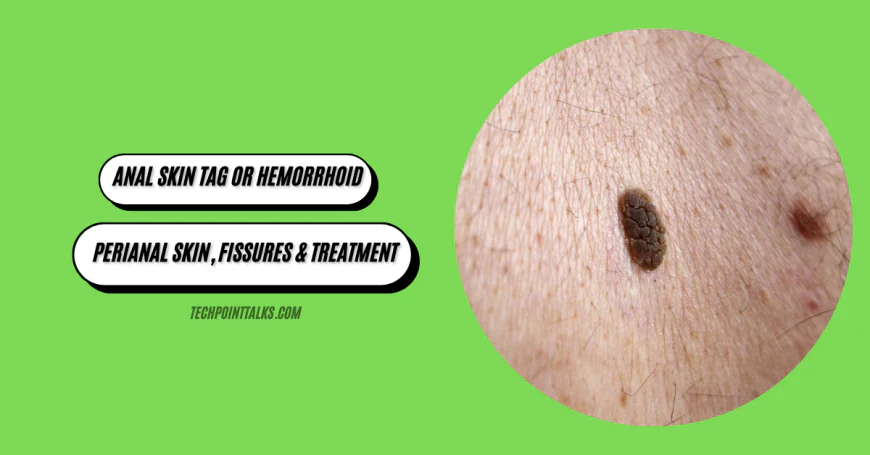
An anal skin tag is an overgrowth of skin which appears on the anus. An anal skin tag is normally painless and soft, and it is a flesh-coloured flap of skin. One should know that these skin growths are not warts, but rather benign, and that is, not cancerous. These skin tags are benign lesions of collagen fibers and blood vessels, plain additional skin at the anus ring.
How Anal Skin Tags Develop
Perianal skin tags are usually associated with friction, friction between skin and skin or friction between skin and clothing, but may as well affect the anal region as a secondary healing effect of hemorrhoids or anal fissures.
A skin tag may be caused by the scar left behind by the healing fissure. Due to such factors as constipation, diarrhea, heavy lifting, tough exercise, or such diseases as Crohn, one of the factors that can lead to the formation of a skin tag is the latter.
Tags around the perianal skin mostly happen after anal fissures have healed and external thrombosed hemorrhoids.
Symptoms and Diagnosis
A skin tag on the anus is often asymptomatic, however, skin tags can be experienced during cleansing. Nonetheless, others get itchy or irritated and might be unable to clean themselves after a bowel movement.
The pain can get worse when one is physically active. Anal skin tags do not involve pain but might be painful and irritating.
A colorectal consultant diagnoses anal sores skin tags in a clinical examination. The consultant will also examine the anus during the examination to determine the presence of the skin tags.
Understanding Hemorrhoids
Piles or hemorrhoids are distended and swollen veins of the anus. They take place when these veins become swollen due to the extra pressure thus resulting to discomfort and other symptoms.
Hemorrhoids will also be inflamed unlike the anal skin tags, and will be able to bleed leading to pain or bleeding during bowel movements. One should distinguish hemorrhoids and anal skin tags, because they are treated differently.
Types of Hemorrhoids: Internal vs. External
Contrasting with perianal skin tags which are typically painless unless irritated, hemorrhoids can produce bleeding, even at the mild level of their irritation.
Whereas skin tags usually present no symptoms, hemorrhoids may result in various symptoms such as pain, itchiness and bleeding during bowel movements. This is one of the major differences that can be used to distinguish a skin tag and a more serious thing.
Perianal Skin Issues
Perianal skin The skin around the anus. As the name implies, perianal skin tags are soft skin projections, which develop around the anus. The hygiene and health of the perianal skin must be taken care of so as to avoid irritation and other complications.
The study of the nature of skin in the area of the anus will aid in distinguishing between normal skin folds and abnormal growths such as anal skin tags.
Common Conditions Affecting Perianal Skin
The perianal skin may be exposed to several conditions that cause discomfort and development of skin tags.
Such conditions as Crohn disease, obesity, pregnancy and other bowel problems might predispose you to the occurrence of perianal skin tags. These skin growths can also be developed in case of chronic irritation of diarrhea or constipation, hemorrhoids, or anal fissures.
Perianal skin care and management of underlying bowel problems are essential in the management of perianal skin.
Identifying Perianal Skin Tags vs. Other Conditions
One should be able to distinguish between perianal skin tags and other disorders that could occur on the anal region. The hemorrhoids and perianal skin tags differ in the fact that the later is painful and swollen.
Warts, linked to human papillomavirus, should be also not confused with the perianal skin tags, which are whitish, reddish, or grey-brown and grow to a size of only a few centimeters.
Warts result in itchiness that is burning and can be a little bleeding. In the majority of situations, the anal skin tags do not bleed, whereas hemorrhoids bleed under the slightest irritation. When in doubt, refer to a medical practitioner to get the diagnosis.
Anal Fissures: Causes and Symptoms
Anal fissure is a wound or cut in the skin of the anus, and this usually happens due to trauma of the anal region. Fissure becomes small (similar to paper cuts) and even difficult to observe at times.
They are often related to passing of hard stool or constant diarrhea. Anal fissures as opposed to anal skin tags that are mostly painless can lead to a lot of pain particularly when passing through bowel movements.
One of the important aspects of the management of anal fissures is the treatment of constipation and healing.
Symptoms and Diagnosis of Anal Fissures
Anal fissures can manifest through several symptoms, particularly when a child needs to have a bowel movement. These symptoms include:
- Bright red blood on the formed stool or toilet paper.
- Itching at the anus.
There may also be pain when the bowel movements take place or when one is feeling like to pass the stool, this may even result in constipation because the child will not want to go to the bathroom.
The condition can usually be diagnosed by a healthcare provider by just having a visual look of the anus where a fissure or a skin tag is usually noticed.
So, one should consult a doctor immediately to make sure he is diagnosed correctly and the condition does not become chronic.
Cases of Anal Fissures
Passage of very huge, or very hard, or dry poop most frequently leads to the development of anal fissures. It may also occur due to diarrhea (runs) or when one strains very hard to get a huge poop out.
Over wiping of babies can lead to fissures. Signs that cause anal fissure include constipation, difficulty in passing the bowel and chronic diarrhea.
These underlying issues should be addressed in order to prevent anal fissures. Anal fissures can be prevented by following a high-fiber diet, sufficient fluid intake, and stool softeners.
Other than home-based remedies, a doctor can prescript topical treatment to facilitate healing.
Treatment Options for Anal Skin Tags and Hemorrhoids
Medical Treatments for Skin Tags
When removal is recommended, several safe and effective in-office procedures are available for anal skin tag removal, and these are performed under local anesthesia for comfort. Some common methods are:
| Procedure | Description |
|---|---|
| Excision | Snipping off the skin tag with sterile surgical scissors or a scalpel, providing immediate results. |
| Ligation | Tying a tiny thread around the base of the tag to cut off its blood supply, causing it to wither and fall off. |
| Cryotherapy | Freezes off the tag using liquid nitrogen. |
| Electrocautery | Burns off the tag using an electrical current to minimize bleeding. |
In short, the way to treat perianal skin tags is by managing the underlying condition.
Preventing Anal Skin Tags and Hemorrhoids
The prevention of anal skin tags and hemorrhoids is associated with proactive attitude to bowel health and hygiene. To avoid constipation, consume sufficient fiber and consume sufficient water.
Diet high in fiber, adequate hydration level and avoiding straining during bowel movements are important to prevent anal skin tags.
Timely treatment of such conditions as hemorrhoids and anal fissure can also help to avoid skin tags.
It is also possible to avoid harsh soaps or wipes and engage in gentle hygiene that will preserve the health of the skin surrounding the anus, which will reduce the likelihood of skin tags and irritation.
When to Seek Professional Help
Although the anal skin tags are not always harmful, some indications can be the subject of medical intervention. Any outgrowth near the anus must be checked by a doctor to eliminate other diseases.
Anal skin tags do not tend to bleed and hence this symptom might indicate the occurrence of another issue.
Warn about the presence of bright red skin, blood in the poop despite soft stools, bleeding that cannot stop, a fissure that fails to heal within two weeks with adherence to the instructions and soft stools, or big painful red bump in the area of the anus.
Consultation and Diagnosis Process
To get professional help, one has to begin with a consultation with a healthcare provider. The most important step is to have a conversation with a doctor and one should not feel embarrassed.
These conditions are presented to healthcare providers on a daily basis. The healthcare provider will undertake a comprehensive examination during the consultation.
And the anal area may be examined visually in order to identify the difference between skin tags and hemorrhoids among other conditions.
In other circumstances, other underlying problems in the rectum may be eliminated by such procedures as anoscopy or sigmoidoscopy.
Professional Treatment Options Available
The possible treatment of the anal skin tags and the conditions that are associated with them can be either the topical treatment or surgery, depending on the severity and the cause.
Other helpful treatments might also be recommended by your doctor or nurse including: stool softener medicine, diaper cream or ointment such as Desitin and zinc oxide, change in diet, loose clothing, bath and wet wipes.
In the case of anal fissures prescription creams can be given to help heal the fissure and help relieve the pain.
Surgery can be suggested in situations of hemorrhoids or skin tags that cause serious discomfort and/or problems.
Conclusion
FAQS
Q1. Who removes perianal skin tags?
A colorectal consultant removes perianal skin tags. They diagnose accurately and perform safe, effective in-office removal.
Q2. Do anal skin tags go away?
Anal skin tags usually do not disappear on their own. They remain even after hemorrhoids or fissures heal. Only a medical removal procedure can eliminate them.
Q3. Who removes rectal skin tags?
Rectal skin tags are removed by a colorectal consultant, who can identify the condition correctly and offer proper in-office removal.
Q4. Are skin tags cancerous?
Skin tags are generally benign and not cancerous, but any new or changing growth should be checked by a healthcare professional.
Q5. Can a person remove anal skin tags?
Home removal is unsafe and can cause infection. Professional removal by a healthcare expert is the safest option.
What's Your Reaction?
 Like
0
Like
0
 Dislike
0
Dislike
0
 Love
0
Love
0
 Funny
0
Funny
0
 Angry
0
Angry
0
 Sad
0
Sad
0
 Wow
0
Wow
0