


































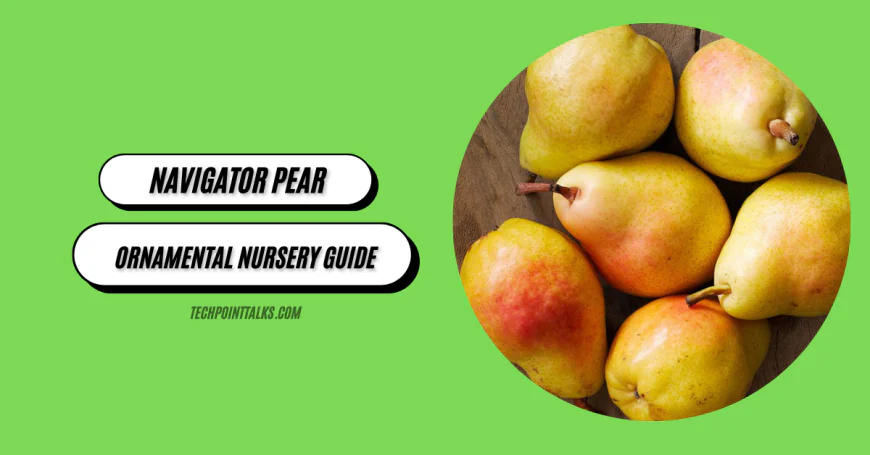
Navigator Pear: Ornamental Nursery Guide
Explore the Navigator Pear: a stunning ornamental tree. Spring's white flowers give way to glossy leaves turning yellow-orange in fall. Find your pear trees now!
You can go on a trip and explore the magical world of the Navigator Pear. Here is a complete reference book to give you all the information you might want to know about this spectacular decorative tree, both in its beautiful spring blossom of white flowers and in its simple adjustability. You will not leave without something useful to yourself whether you are an experienced gardener or a beginner gardener when it comes to growing and taking care of the Navigator Pear.
Introduction to the Navigator Pear
One of the most outstanding varieties is the navigator pear. Being a relatively new type, it is much more valued in terms of its outstanding qualities. The navigator pear was created to grow in different climates. It is famous to grow a sweet and juicy fruit.
The navigator pear is an excellent option to a gardener, as it is disease free; it has its roots in a well bred breeding program.It has been designed in such a way that it resists common pests as well as environmental stressors and at the same time produces high quality fruit.
The fruit is a delight to all the palates worldwide. The navigator pear is becoming increasingly popular with both growers and consumers alike and thus is becoming a staple in orchards.
Characteristics of Pear Trees
The pear Navigator is one of the most remarkable in the row, and it is characterized by its original features. This type has a very striking greenish-yellow skin, which gets a slight blush when it is ripe.
The shape of the fruit is somehow long, tapered at the end which gives it an attractive shape. The hard flesh is one of the characteristics of the Navigator pear.
As you will bite one, you will realize that it is crisp but juicy, a wonderful combination that will improve the food experience. It is also used in a number of culinary dishes because it does not change its texture when it is not ripe.
The Role of Navigator Pear in Orchards
The Pear variety, Navigator is one that has a rich history traced back to the European fertile orchards. It is thought to have been grown as early as the 18 th century, and it is enjoyed because of its sweet taste and its crispy crunchy texture.
These pears were grown under perfect climates, as they were grown in regions which were characterized by fertile soils.
The farming started crossing borders, which is why farmers started using varieties, which are adaptable to different environments. The popularity of this fruit was because of its strength and flexibility.
The Navigator Pear did not only thrive at home gardens but also in the commercial orchards, and it was a great asset in the fruit industry.
Planting a Navigator Pear Tree
These are the main points to consider when a navigator pear tree is being planted. Make sure you:
- Sowing in spring In early spring or late autumn, the soil is usually soft and the temperatures are cool.
- Select a spot that is well drained and has complete sunshine.
In addition, you should spacing of pear trees at a distance of 15 feet to ensure that there is air circulation.
The soil preparation should be prioritized by adding organic substances such as compost to the soil. Prepare a hole at least twice the width of the root ball but not half the height so the graft union was raised above the surface.
Soil Requirements and Site Selection
Navigator pears need combination of classic knowledge and new skills. The growers start with the appropriate location whereby they aim at a place with good drainage and plenty of sunlight.
The navigator pear tree is very sensitive to well-drained soil. The wealthy soils are the sandy loam or clay loam soils which contain high amount of organic matter, which will guarantee high drainage at the same time ensuring that it is not dry.
The optimum is between 6.0 and 7.5. The complete sun exposure is critical in the growth of this type. Strive, at the least, to have six to eight hours of bright sunlight per day to promote healthy plants and fruitful and tasty fruit. First, choose an appropriate site that has a lot of sunlight and well drained soil to achieve maximum growth.
Watering and Maintenance Tips
Watering is the most important factor once the planting has been done, the soil must always be wet but not swamped when establishing the plants. Regular irrigation will ensure the constant moisture level in the soil, but do not irrigate the soil too much, it may result in root rot.
Trees of these types may be pruned on a regular basis to ensure the trees remain healthy and their fruits are of high quality. Watch the watering requirements, particularly during a dry season but do not over water because it will cause roots rot. The pear of navigator is an outstanding selection in every orchard.
Harvesting and Caring for Navigator Pears
Pear picking Timely picking of navigator gives the best flavor and quality. Observe slight conversion of green to yellow and this is more near the stem. As far as harvesting is concerned timing is essential.
The Navigator pears are harvested when they are as ripe as possible in order to have the best taste and texture. Garden centres offer good advice on harvesting so that each of the pears can reach its maximum potential.
Post-Harvest Care
After picking, the store navigator pears in a cool environment that is not exposed to the sun. The temperature (30-35 0 C) should be low so as to increase freshness. When you have more than one or two pears at a time, you may use it in a paper bag; the bag will help get the gas carbon dioxide and make them ripen.
With good after harvest handling, the pears will maintain their quality hence being ideal in consumption as fresh ones or in cooking. It is important to store the products carefully so that they maintain their original flavor and texture.
Enhancing Taste and Texture
The fruit must also be tender enough to squeeze with your thumb. It is possible to test a couple of samples to decide whether they are ready. Clean sharp pruning shears should be used to ensure the tree is not damaged or fruit during the harvest is not damaged.
Pearls should not be mishandled and bruised. It is preferable to choose them during a dry day because when moist then they are likely to rot during storage.
This is to make sure that the individual pear keeps its best taste and texture which adds more pleasure to the overall taste of the harvest. Read about the method of picking pearls.
Common Pests and Diseases
The principle of keeping navigator pear trees in good health and activity is to remain on the alert against certain pests that are likely to attack them. Such pests may be an obstacle to healthy growth and reduce the overall attractiveness of the tree.
It is also recommended by garden centres that these trees are attracted by aphids and pear psylla which feed on sap.
By sucking sap, they cause the plant weakness and may cause diseases and this is one of the reasons why it is vital to find and pursue a cure in order to sustain the health and liveliness of the navigator pear.
Effective Pest Management Strategies
Early detection is vital. Garden centres normally suggest it to be used with organic insecticides or to add natural predators such as ladybugs to chemically keep down these pests.
When needed, the use of integrated pest management strategies is relevant in solving pest problems without necessarily causing damage to useful insects and the environment.
By being active in relation to these troubles you will keep your crop healthy and beautiful and have your ornamental pear unmarred. Pruning is another good technique of disposing pests.
Preventing Diseases in Pear Trees
It is essential to prevent any disease to have a healthy and beautiful navigator pear. Some of the common issues are pear scab and fire blight. It occurs in the form of dark spots on the leaves and fruit resulting in untimely leaf fall and lower yields.
This issue can be alleviated by regular monitoring and sanitary practices. It can be prevented by pruning out the affected areas when dry so that the instruments are sterilized between cuts. These measures can ensure healthy development.
Benefits of Growing Ornamental Pear Trees
The navigator pear is not only about a tasty fruit, it also provides a lot of beauty to the landscapes. The tree provides rich green leaves that provide it with a colorful look throughout the growth period.
The navigator pear has gorgeous arrangements of white flowers in early to mid spring. These white flowers are very bright and appeal to such pollinators as butterflies and bees to increase biodiversity in your garden.
The leaves of the tree change to yellow-orange and form an impressive contrast as the fall approaches. The bare branches are also beautiful even in winter months after the leaves had fallen.
The navigator pear trees are the plantation that offers beauty to any garden area because of its decorative nature.(Learn more on fruitsandvegetable).
Environmental Benefits and Wildlife Support
Planting of ornamental pear trees such as the navigator pear has many positive impacts on the environment. The trees are very good at improving biodiversity by improving pollination of your garden e.g. by bees and butterflies.
These are spring white flowers, which also serve as nectar sources, and therefore sustain local populations of pollinators.
The ornamental pear canopy is also thick, providing shelter and nesting places to the different bird species, which also leads to the well-being of the local ecosystem.
A very good option is the navigator pear that would improve the local environment, which would also give the local fauna food and shelter.
Comparing Navigator Ornamental Pear to Other Varieties
When considering ornamental trees for your landscape, the navigator ornamental pear stands out as a superb choice. This navigator pear offers distinct advantages in terms of adaptability and visual appeal. Unlike some varieties, the navigator pear is known for its resilience in colder climates.
It presents a dense pyramidal form that maintains its elegance throughout the seasons. Its ability to thrive in diverse soil conditions and its resistance to many common pear diseases make it a practical choice.
Conclusion
The navigator pear -the pear whose white blossoms in the spring, and whose autumn leaves, provide such a beautiful and useful addition to any garden- is one which it would be hard to regard as anything but a treasure and a blessing.
It is an outstanding slick-leafed ornamental pyramidal pear tree with a glossy leaf. The key to its successful growth, whether in the form of planting or pruning, is knowing the finer details of its care, as only through it the navigator ornamental pear will be able to live, and years of pleasure will be obtained.
We are sure to include this amazing tree in your garden to add a sense of elegance and a treasure trove of environmental gain thus making your garden centre your first choice.
FAQs
Q1. What is the best-tasting pear?
The best-tasting pear varies by preference, but Comice pears are widely considered the sweetest and most buttery. Bosc pears offer a crisp, slightly spicy flavor, while Anjou pears provide gentle sweetness and smooth texture.
Q2. Which pear tree is the sweetest?
The Seckel pear tree is known as one of the sweetest varieties, producing small but intensely sugary fruit. Comice pears are also very sweet and juicy. Growing conditions ultimately influence sweetness levels.
Q3. What is NAV CANADA’s role at Pearson Airport?
NAV CANADA manages air traffic services at Toronto Pearson, including air traffic control, flight information, weather updates, and navigational support. Its operations ensure safe and efficient aircraft movement at Canada’s busiest airport.
Q4. Can you eat Navigator pears?
Yes. Navigator pears are fully edible and known for their sweet, juicy flavor. They are excellent for fresh eating, cooking, and preserving, offering both ornamental beauty and high-quality fruit.
Q5. What is the Navigator pear?
The Navigator pear is a dual-purpose variety valued for both its ornamental appeal and flavorful fruit. It features a pyramidal shape, spring white blossoms, and reliable fruit production, making it a popular choice for gardens and orchards, especially in Saskatchewan.
What's Your Reaction?
 Like
0
Like
0
 Dislike
0
Dislike
0
 Love
0
Love
0
 Funny
0
Funny
0
 Angry
0
Angry
0
 Sad
0
Sad
0
 Wow
0
Wow
0